

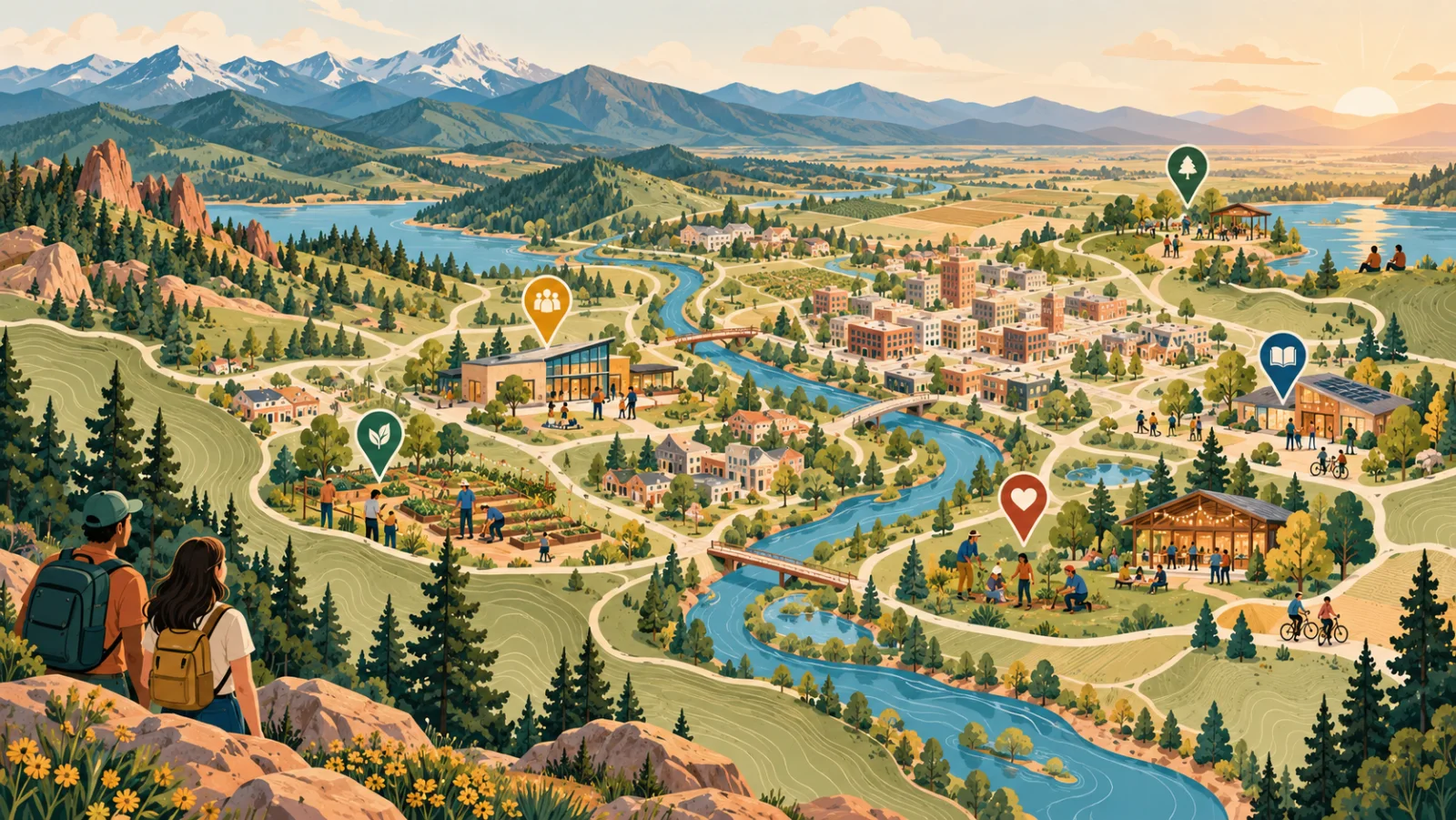
There are people in every community doing meaningful work that most of us never hear about. They’re supporting young people, helping neighbors find housing, protecting local ecosystems, and creating places where people feel they belong.
There are also people who want to help but aren’t sure where to begin. They might know what they care about without knowing which organizations work on that issue nearby. Or they might find an organization and then spend an afternoon piecing together what it does, where it works, and how to get involved.
Giveback Map starts with that gap.
It’s a prototype for exploring local nonprofits and community resources, beginning in Northern Colorado. The idea is to help people move from a general desire to give back to a clearer understanding of the organizations and opportunities around them.
More than pins on a map
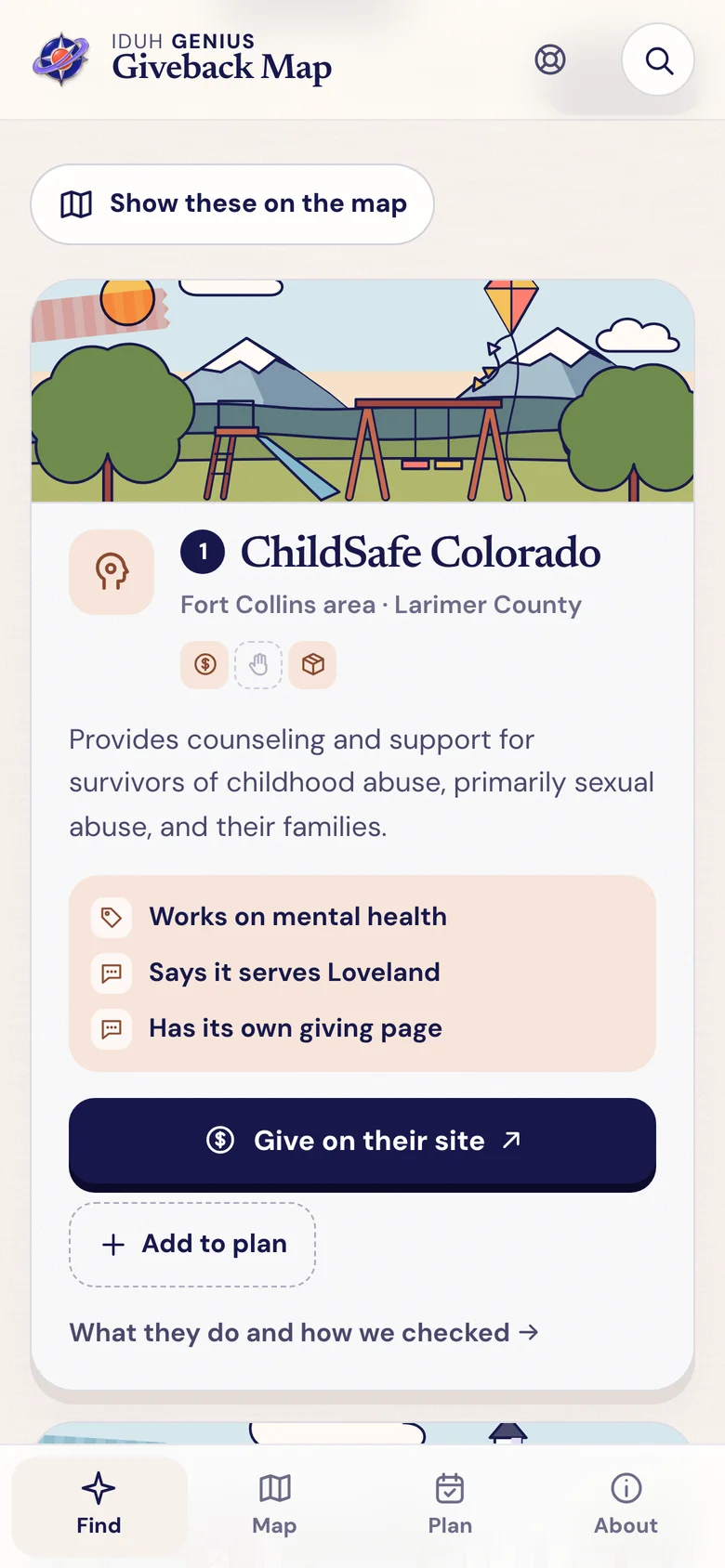
A map can show you where an organization is. Giveback Map aims to help answer the questions that come next: What does this organization do? Who does it serve? Where does it work? How might I support it?
The prototype brings organizations into a browsable map and list, with profiles, search, saved organizations, and comparisons. It also includes public resources as a separate category, because a government office or service can be valuable to a community without being a nonprofit seeking donations.
The goal is not to declare one organization “best.” Different organizations approach different needs in different ways. A useful comparison should make those differences easier to understand, not reduce an organization’s value to a single score.
From an idea to a place to begin
One of the things I find interesting about this project is the way it starts with a person’s intention.
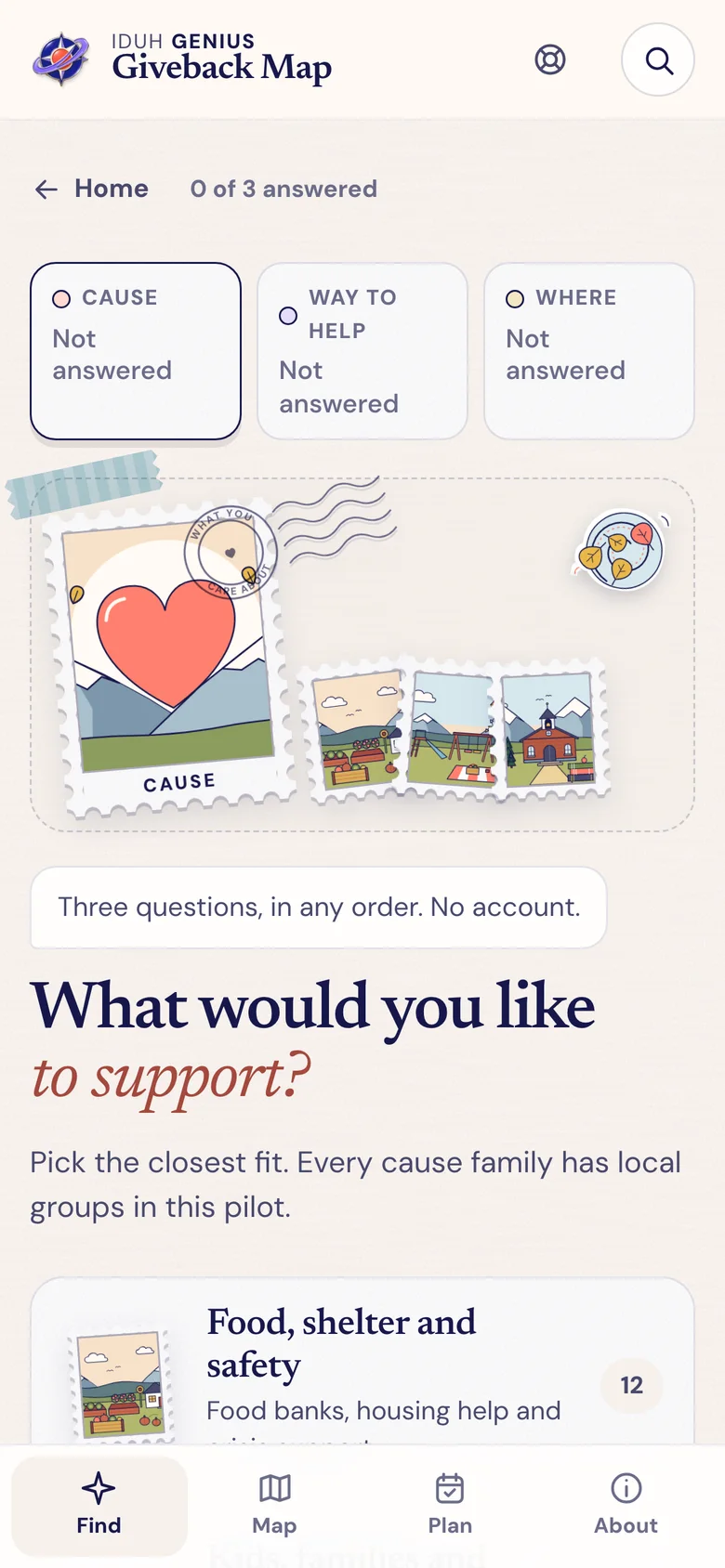
Someone might say, “I want to help young people feel less alone,” or “I care about food access in my community.” Those are meaningful starting points, even if they aren’t the exact words an organization uses on its website.
The longer-term vision includes a conversational guide that can help translate those interests into relevant, sourced opportunities to explore. The current prototype’s guided finder is rule-based; a grounded AI guide is part of the direction we’re exploring, not something I’m claiming is already live.
Trust has to be part of the design
A helpful directory needs more than an attractive interface. The information has to be understandable, sourced, and maintained.
That means distinguishing an organization’s official information from an editorial description, being honest about what we don’t know, and checking details that can change. It also means recognizing that an organization’s headquarters and the communities it serves are not necessarily the same place.
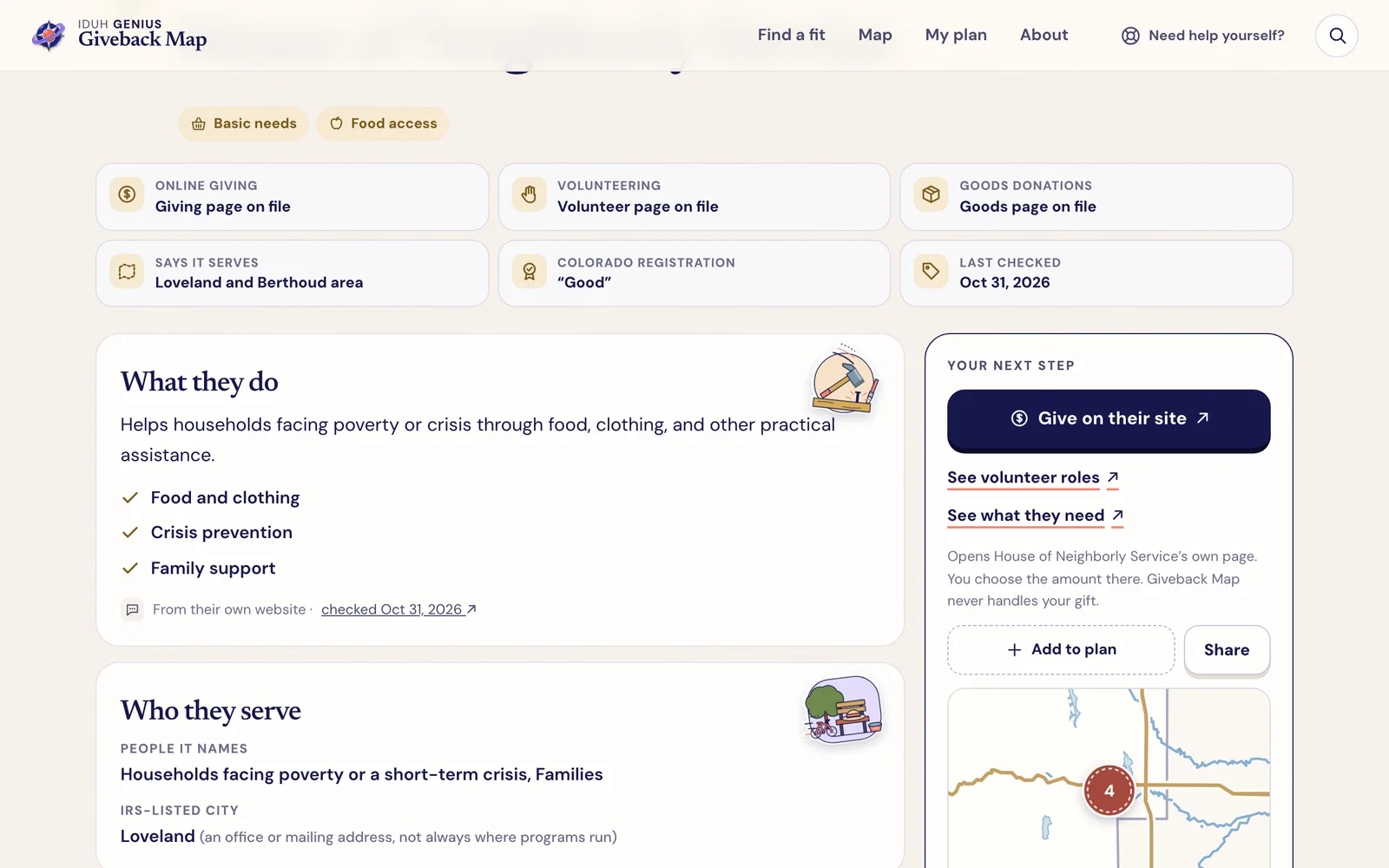
The prototype is an early step. Its profiles and other information still need review before people should rely on it as a finished public resource.
Starting locally, thinking bigger
Northern Colorado gives Giveback Map a place to begin. Starting with a community makes it possible to learn whether the information is actually useful, what people need when they’re deciding how to help, and how to represent organizations fairly.
At IDuh Genius, we’re interested in tools that help people make sense of information and put their intentions into action. Giveback Map applies that idea to a question with a distinctly human answer: how do we show up for one another?
There’s plenty left to learn, and we’re sharing the concept in that spirit. If you’re interested in the intersection of local community, philanthropy, and thoughtful technology, we’d love to hear what would make a resource like this useful to you.